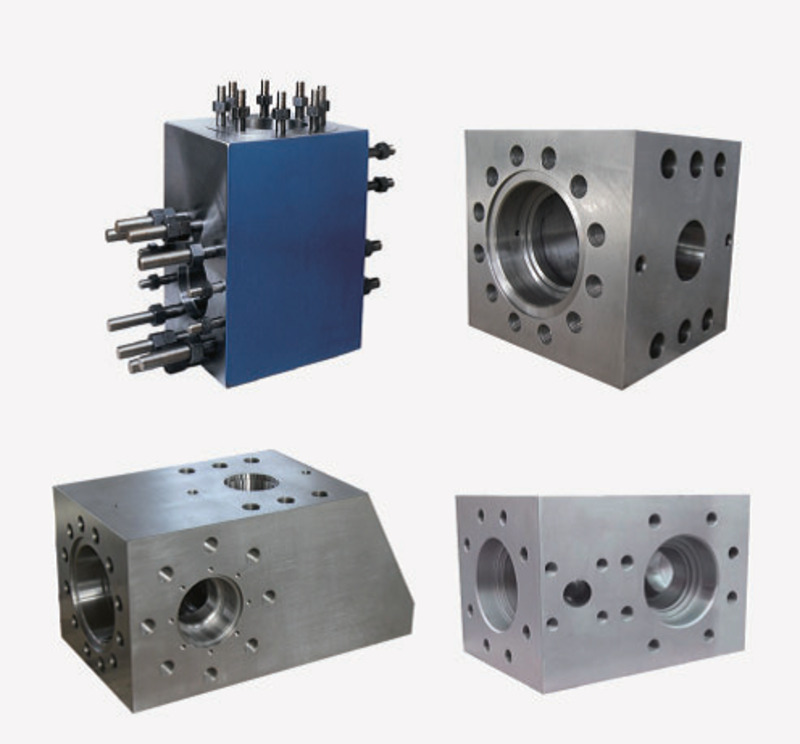

A mud pump fluid end module is a pressure-containing assembly whose suitability depends on more than a familiar pump name. For procurement teams, drilling engineers and maintenance planners, the safest purchasing decision begins with verified drawings, operating data and an agreed inspection plan. This guide explains how to define the requirement, compare supplier documentation, inspect a delivered module and prepare it for service without assuming unverified interchangeability.
What a Fluid End Module Does
The power end converts rotary input into reciprocating motion. The fluid end uses that motion to draw drilling fluid into a cylinder and discharge it into the circulating system. The module forms part of the pressure boundary and provides locations for liners, valves, seats, covers, seals and connections. Its crossbores and sealing interfaces experience repeated pressure cycles while internal passages contact drilling fluid that may contain suspended solids.
Drilling fluid is not one uniform medium. The SLB drilling-fluid definition notes that drilling fluids may be water based, nonaqueous based or gaseous, with many overlapping subcategories. Fluid composition, solids, temperature and chemistry therefore belong in the technical enquiry. A replacement decision based only on nominal pressure or exterior appearance leaves important compatibility questions unanswered.
Define the Requirement Before Requesting a Quote
Identify the exact pump configuration
Record the pump manufacturer, model, serial number when available, fluid-end arrangement and the controlled part number of the installed module. Include clear photographs of nameplates, connection faces, liner bores, valve pots and any legible casting or forging marks. If the pump has previously been rebuilt or modified, state that explicitly. Similar model names do not prove that bolt patterns, bore geometry, gasket grooves or accessories are identical.
Provide operating and fluid information
State the normal and maximum operating conditions approved for the pump, typical stroke rate, liner size and drilling-fluid information available to the operator. Describe known corrosion concerns, abrasive solids and unusual temperature conditions without guessing. The supplier should use these inputs to review material, seal and accessory choices; they should never replace the original equipment manual or an engineering verification.
Define the supply boundary
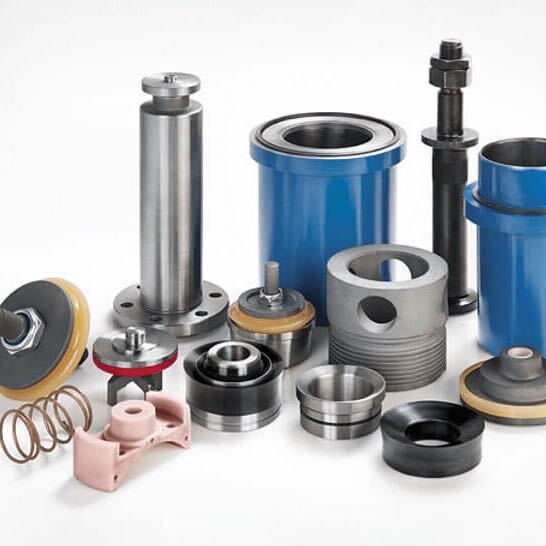
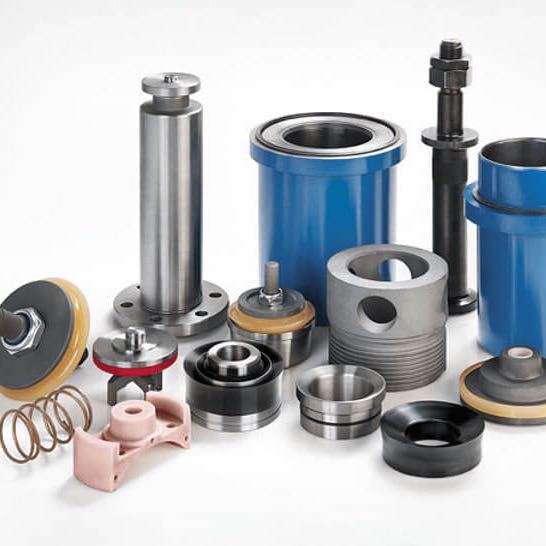
Clarify whether the request is for a bare module, a module with studs and covers, or a complete package with liners, pistons, valves, seats, gaskets and related hardware. LONGCHAO’s fluid end package service describes modules together with pistons, valves, seats and gaskets. Listing every required item on the purchase order reduces the risk of discovering missing hardware during installation.
Compatibility Evidence Buyers Should Request
A credible compatibility review should be traceable. Ask the supplier to identify the reference drawing and revision used for manufacturing. Where applicable, compare these controlled features:
- module orientation, mounting faces, overall envelope and critical centerlines;
- liner bore, liner-retention interface and piston alignment relationship;
- suction and discharge valve-pot geometry, tapers and cover interfaces;
- gasket grooves, seals, studs, threads and connection details;
- suction and discharge manifold interfaces;
- required accessories, lifting provisions and installation tooling.
Do not accept a statement such as “fits this brand” as the only evidence. A part number cross-reference, approved dimensional table or reviewed drawing is more useful. If any interface cannot be confirmed, treat the item as an engineered replacement and resolve open points before production.
Material and Manufacturing Documentation
Fluid end modules are commonly associated with forged and heat-treated steels, but the exact grade, heat-treatment route and mechanical-property requirements must come from the applicable design and purchase specification. Buyers should request material certificates linked to a heat or batch identity, dimensional inspection records and agreed nondestructive-examination documentation. The purchase order should also define whether pressure testing is required, the governing procedure, acceptance criteria and records to be supplied.
API’s overview of Specification 7K describes requirements for drilling and well-servicing equipment and lists piston mud-pump components within its scope. However, the overview alone does not establish that every fluid end module, material choice or replacement claim is compliant. Confirm the current standard, edition and exact product applicability in the contract instead of applying a broad “API” label.
Incoming Inspection Before Installation
Document identity and condition
Check the purchase order, packing list, module identification and supporting certificates before removing protective packaging. Photograph the received condition. Look for transport damage, corrosion, missing protection and contamination. Confirm that openings, machined faces and threads are protected and clean.
Verify critical dimensions
Use calibrated tools and the approved drawing to check dimensions identified in the inspection plan. Concentrate on interfaces that control alignment, sealing and assembly. A complete inspection does not mean measuring every surface at random; it means verifying features that determine fit and function, recording results and resolving deviations before installation.
Inspect pressure-boundary surfaces
Examine accessible crossbores, sealing areas, threaded zones and transitions under adequate lighting. Evaluate surface condition against the agreed drawing and acceptance criteria. Never improvise field grinding, welding or blending on a new pressure-containing module without an approved repair procedure and engineering authorization.
Installation and Commissioning Controls
Follow the pump manufacturer’s service manual, site lockout procedure and approved lifting plan. The IADC guidance on working on mud pumps emphasizes locking out the pump, releasing pressure before opening the system and using assistance or lifting equipment for heavy components. These are baseline safety principles; the site procedure and equipment manual remain controlling.
Before assembly, verify cleanliness and confirm that all gaskets, seals, fasteners and expendables match the reviewed bill of materials. Use the specified lubricant, tightening method and sequence. Confirm piston and liner alignment rather than assuming mounting faces alone guarantee it. After assembly, perform prescribed leak and functional checks while monitoring for abnormal noise, vibration, temperature or leakage.
NOV’s fluid end expendables troubleshooting guide covers common failure mechanisms and corrective actions for triplex pump components, including modules in brief. Its recommendations support structured troubleshooting, but pump-specific instructions must take priority.
Plan the Module as a System
A sound module can still suffer if related expendables, alignment or operating conditions are wrong. Review liner, piston, valve and seat condition as one system. The site’s mud pump piston product reference and valve-seat inspection guide can help organize component-level questions. For liner material and RFQ inputs, see the mud pump liner selection guide.
Track leakage, unusual pressure behavior, maintenance findings and replaced parts after commissioning. If a failure occurs, preserve photographs, samples and operating records. Replacing the module without identifying a damaged bore, mismatched expendable, suction problem or assembly error may reproduce the same failure.
Fluid End Module RFQ Checklist
- pump make, model, serial number and current module part number;
- approved drawing, revision and required configuration;
- operating conditions, liner size and available drilling-fluid data;
- bare-module or complete-package supply boundary;
- material, heat-treatment and traceability documents;
- dimensional, nondestructive and pressure-test requirements;
- preservation, packaging, lifting and delivery requirements;
- inspection hold points and documentation format;
- required gaskets, studs, covers, valves, seats, liners and pistons;
- installation manual and post-delivery technical support.
Frequently Asked Questions
Can two fluid end modules with the same pump model name be interchangeable?
Not automatically. Confirm the controlled part number, drawing revision, mounting and manifold interfaces, valve-pot geometry, liner-retention arrangement and accessory requirements.
Should a buyer specify a material grade in the RFQ?
Use the original design requirement or an approved engineering specification. If an alternative is proposed, request a documented equivalency review covering mechanical properties, heat treatment, corrosion considerations and inspection requirements.
Is a pressure-test certificate enough for acceptance?
No. Pressure testing addresses only the procedure and acceptance criteria stated on the record. Identity, material traceability, dimensions, surface condition, NDE and documentation may also be required.
Can old valves, seats and liners be reused with a new module?
Only when the applicable manual permits reuse and each component meets its inspection limits. Reusing unidentified or damaged expendables can compromise sealing and obscure the cause of a problem.
What information is most important for a supplier?
The controlled part number or reviewed drawing, exact pump configuration, supply boundary and operating context are the strongest starting points. Photographs and measurements help, but they should support rather than replace controlled technical documentation.
Final Takeaway
Buying a mud pump fluid end module is a pressure-boundary and compatibility decision, not a catalog shortcut. Define the pump configuration, verify interfaces, agree on material and inspection documentation, and inspect the delivered module before installation. A traceable RFQ and disciplined commissioning plan protect the pump, reduce avoidable rework and give maintenance teams a defensible baseline for future troubleshooting.